
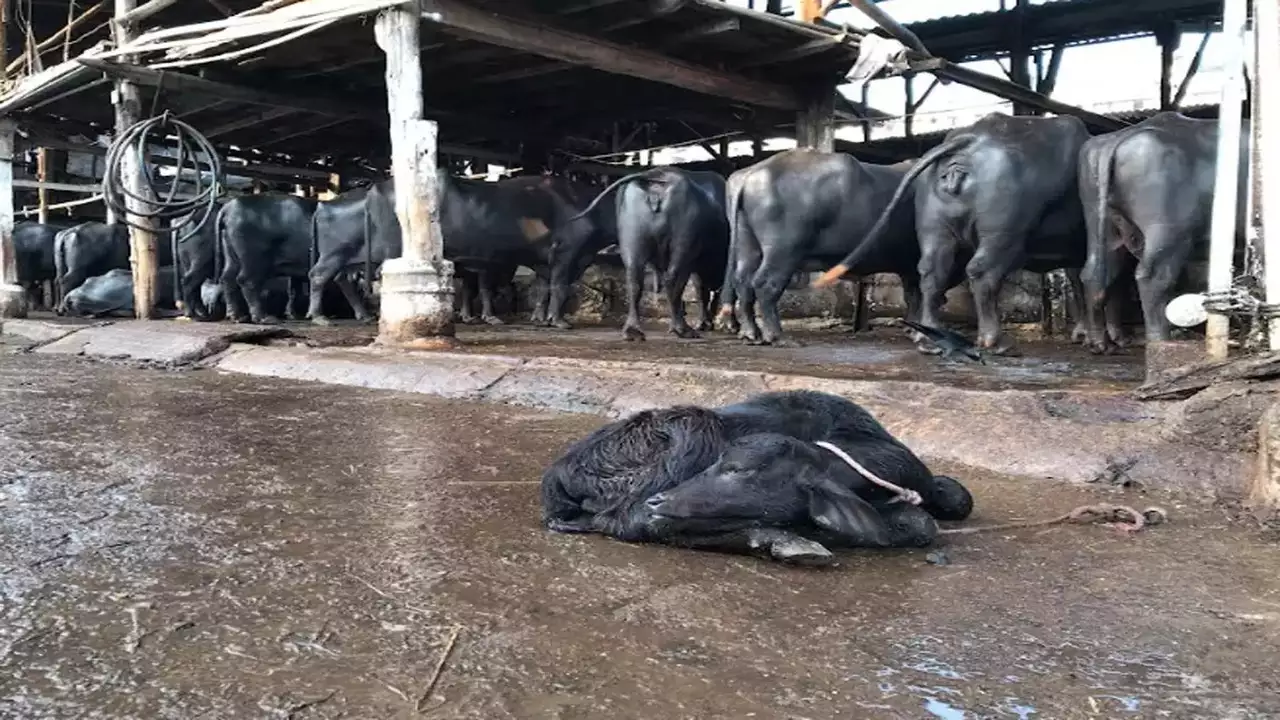
When we think of dairy, most of us picture lush green pastures, happy cows, and warm barns—a wholesome, idyllic life. But the reality of the dairy industry couldn’t be further from that romanticized image. Beneath the glossy advertisements and comforting labels lies a brutal and heart-wrenching system of exploitation, suffering, and commodification of sentient lives.
The Myth of the “Happy Cow”
The dairy industry thrives on a well-crafted illusion. It wants you to believe that cows live fulfilling lives, giving milk naturally and willingly. But in truth, dairy farming—especially in industrialized setups—is a cycle of forced breeding, physical pain, emotional trauma, and premature death.
To produce milk, a cow must first be pregnant. This means that female cows are forcibly impregnated, often using a device euphemistically called a “rape rack.” Once the calf is born, the mother is given only moments—if that—with her baby before they are torn apart. Why? Because the milk meant for her calf is redirected to human consumption.
Calf Cruelty: A Hidden Tragedy
Male calves are considered useless by the dairy industry since they cannot produce milk. Their fate is tragic: many are either slaughtered within days or sold into the veal industry, where they live short, confined, and miserable lives. Female calves, on the other hand, are groomed to replace their mothers, stepping into the same agonizing cycle of forced reproduction and milk extraction.
The cries of a mother cow for her lost calf can be heard for days. This isn’t anthropomorphism—it’s documented behavior. Cows are deeply emotional creatures, capable of forming strong bonds and experiencing grief. The separation is not just cruel—it’s unnatural.
The Physical Toll on Cows
A cow in a natural setting might produce 4–5 liters of milk a day to feed her calf. In modern dairy farms, genetic manipulation and hormones have pushed this number to 20–30 liters or more. This unnaturally high output takes a huge toll on the cow’s body, leading to painful conditions like mastitis (an udder infection), lameness, and exhaustion.
Once their bodies are no longer profitable—usually by the age of 5 or 6—these cows are sent to slaughter, even though their natural lifespan could be 20 years. Their only reward for years of forced labor is a brutal end.
Environment and Ethics
Beyond the moral implications, the dairy industry also wreaks havoc on the planet. It’s a significant contributor to greenhouse gas emissions, deforestation, water pollution, and overuse of natural resources. All for a product humans don’t even biologically require after infancy.
So why does it continue? Because it’s profitable. Because marketing is powerful. Because tradition is a hard chain to break.
A Kinder Alternative
The good news? Change is possible. Plant-based milks—made from oats, almonds, soy, coconuts, and more—are kinder to animals and the environment, and increasingly available and affordable. Going dairy-free is one of the most powerful choices an individual can make to reduce animal suffering and environmental impact.
Final Thoughts
The cruelty of the dairy industry is not always visible, but it is ever-present. It hides behind smiling mascots, pastoral scenes, and the comforting phrase: “It’s just milk.” But every glass of milk, every slice of cheese, and every scoop of ice cream comes at a cost—paid in the tears, blood, and lives of animals who never had a choice.
Awareness is the first step. Compassion is the next. The future can be different—but only if we choose to make it so.