

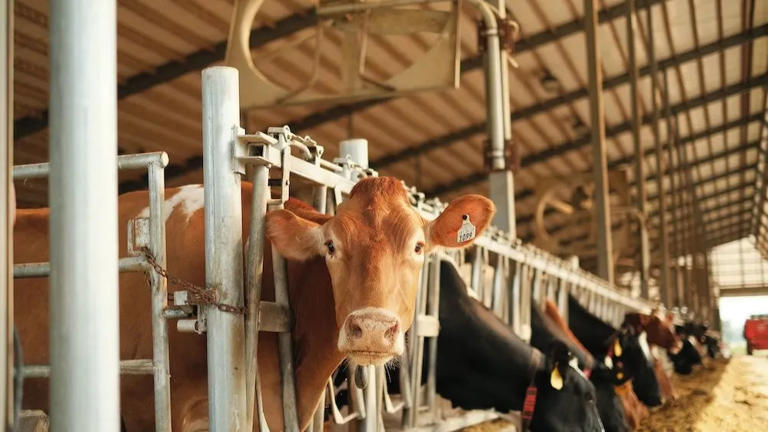
When most people think of dairy, they imagine wholesome images of cows grazing on green pastures and glasses of fresh milk on breakfast tables. But behind this idyllic picture lies a less talked-about truth: the significant environmental pollution caused by the dairy industry. From greenhouse gas emissions to water contamination, dairy farming has a heavy ecological footprint.
1. Greenhouse Gas Emissions
Cows are ruminant animals, which means they produce methane—a potent greenhouse gas—during digestion. Methane is over 25 times more effective at trapping heat in the atmosphere than carbon dioxide over a 100-year period. A single dairy cow can emit up to 100 kg of methane per year, and with millions of cows in operation globally, the emissions add up fast. Additionally, fossil fuels are burned in the production, processing, and transportation of dairy products, further adding to the industry’s carbon footprint.
2. Water Pollution
Dairy farms generate massive amounts of manure and urine, which can contaminate nearby water sources if not managed properly. Runoff from manure lagoons and fertilized pastures often leads to nitrate and phosphorus pollution in rivers, lakes, and groundwater. This results in eutrophication, where excessive nutrients promote algal blooms that deplete oxygen in water, killing fish and destroying aquatic ecosystems.
3. Water Usage
Producing dairy is also incredibly water-intensive. According to estimates, it takes over 1,000 liters of water to produce just one liter of milk. This includes water used for feed crops, hydration, and cleaning. In water-scarce regions, this kind of demand puts immense stress on local water supplies and contributes to water scarcity.
4. Land Degradation and Deforestation
To sustain dairy operations, vast areas of land are required for grazing and growing feed crops like corn and soy. This often results in deforestation, loss of biodiversity, and soil degradation. Forests that once served as carbon sinks are cleared to make room for industrial-scale dairy farming, further accelerating climate change.
5. Chemical Pollution
Pesticides and fertilizers used on feed crops can run off into surrounding ecosystems, contaminating soil and waterways. Additionally, hormones and antibiotics used in dairy cattle can enter the environment through waste streams, potentially leading to antibiotic resistance and harmful effects on wildlife.
A Need for Conscious Choices
While dairy has long been a dietary staple in many cultures, its environmental consequences are becoming impossible to ignore. Choosing plant-based alternatives like almond, soy, oat, or cashew milk can significantly reduce your ecological footprint. Supporting local, sustainable farming practices and reducing dairy consumption—even just a few days a week—can also make a difference.
Our everyday choices matter. By becoming more aware of the environmental impact of what’s on our plate, we can take steps toward a cleaner, healthier planet—for ourselves and future generations.